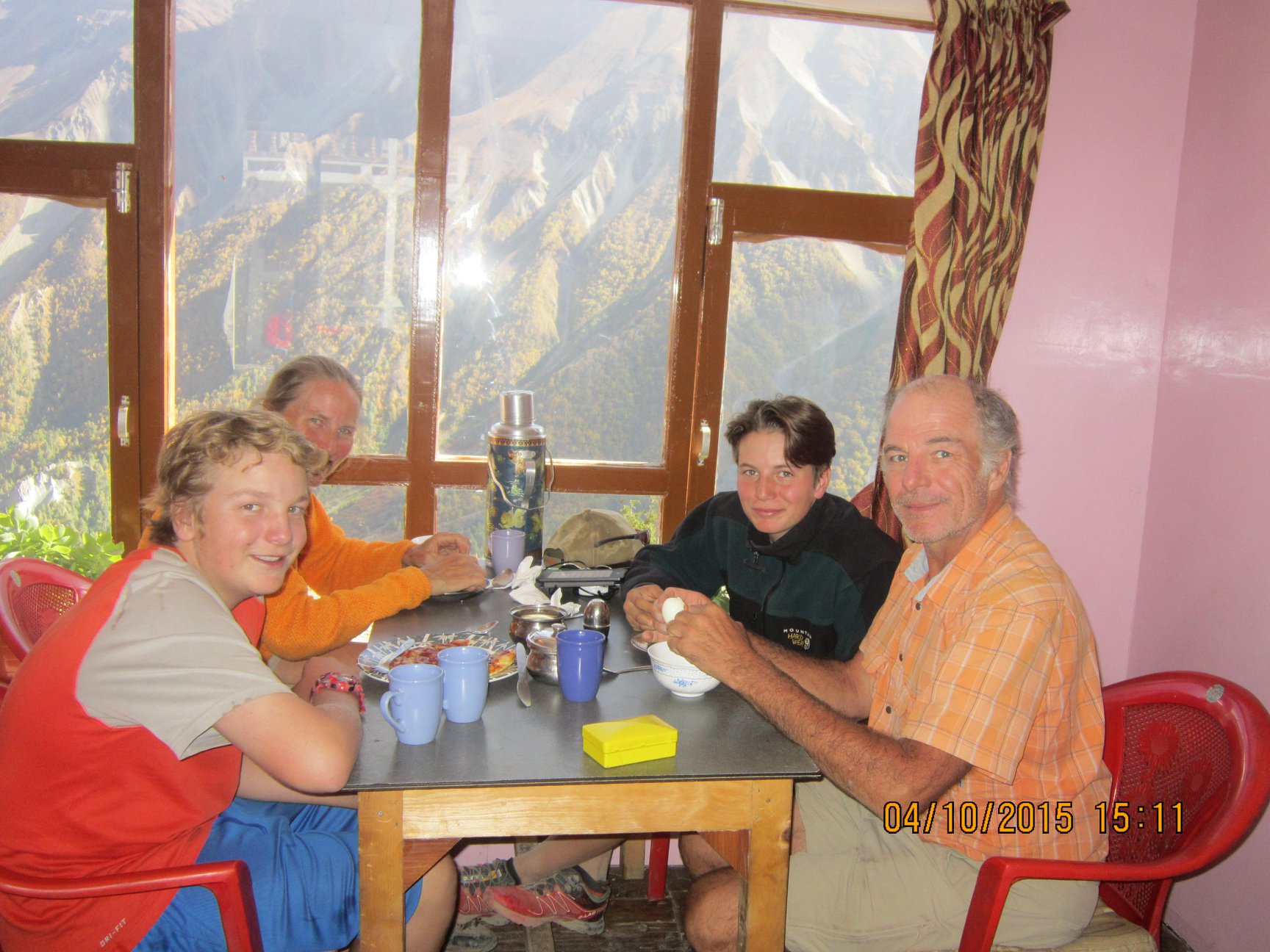
People in Tsum Valley Trekking area still practice polyandry system and they have their own unique culture, tradition, & dialect. They celebrate unique festival like Lhosar, Dhacyhang, Saga Dawa, Faning & others. Many residents of this valley report that they have seen or found the signs of Mehti, commonly referred as the 'Yeti' or 'Abominable Snowman'.
- Dates: Daily
- Best Season: September to December
- Duration: 23 Days
- Trekking Days: 18 Days
- Grade: Hard-Medium
- Maximum Altitude: 5000 m
- Commences At: Arughat
- Ends At: Arughat
- Code: HTSV-I
Price: $ 1650 P/P, US$ 2500 Full camping
Itinerary
Day 01 Arrival Kathmandu
Day 02 World Heritage sightseeing in Kathmandu
Day 03 Driving from Kathmandu to Arughat(535m-10 hours by bus)
Day 04 Trek from Arughat to Liding(860m-7km-4 hours walk)
Day 05 Trek to Machhakhola(930m-9km-5 hours walk)
Day 06 Trek to Jagat(1410m-11km-6hours walk)
Day 07 Trek to Lokpa(2040m-10km-5 hours walk)
Day 08 Trek to Chunling(2363m-7km-3.5 hours walk)
Day 09 Trek to Chhokangparo(3010m-13km-8 hours walk)
Day 10 Rest day in Chhokangparo /Site Excursion
Day 11 Trek to Chhule-Nile(3361m-9km-4.5 hours walk)
Day 12 Trek to Mu Gompa(3700m-5km-3 hours walk)
Day 13 Trek to Rachen Gompa(3240m-8km-4.5 hours walk)
Day 14 Trek to Dumje(2440m-11km-6.5 hours walk)
Day 15 Trek to Gumba Lungdang(3200m-6.5km-4 hours walk)
Day 16 Rest day in Gumbu Lungdang
Day 17 Trek to Ripchet(2468m-9km-5 hours walk)
Day 18 Trek to Dobhan(1070m-14km-7 hours walk)
Day 19 Trek to Soti Khola (720m-18km-9 hours walk)
Day 20 Trek to Arughat(535m-7km- 4 hours walk)
Day 21 End trek drive to Pokhara at Shangrila Village Resort
Day 22 Leisure in Kathmandu
Day 23 Departure Kathmandu
Tsum Trekking in Nepal is a sacred Himalayan pilgrimage valley situated in northern Gorkha, Nepal. ‘Tsum’ comes from the Tibetan word ‘Tsombo’, which means vivid. Traditionally, Tsum valley was a currently distinct geographical area called ‘Tsum Tso Chucksums’, which means thirteen provinces ruled as a single territory. Against the majestic backdrop of the Ganesh Himal, Sringi Himal, Boudha Himal ranges, this serene Himalayan valley is rich in ancient art, culture and religion. The local people are mostly of Tibetan origin & speak their own dialect. The altitude of Tsum Valley trek varies from 1905m in Lhokpa to over 5093m at Ngula Dhojhyang pass on the Tibatan border. The hidden valley is surrounded by the Boudha Himal and Himal chuli to the west, Ganesh Himal to the south & Sringi Himal to North.
People in Tsum Valley Trekking area still practice polyandry system and they have their own unique culture, tradition, & dialect. They celebrate unique festival like Lhosar, Dhacyhang, Saga Dawa, Faning & others. Many residents of this valley report that they have seen or found the signs of Mehti, commonly referred as the ‘Yeti’ or ‘Abominable Snowman’.
The trials are strewn with artistic chortens and lined with Mani walls made of thousands of stone slabs carved with drawings of deities and inscribed with prayers. The famous Kyimo Lung, a pilgrimage circuit in the central Trans-Himalaya is a well known seat of learning and a seat of meditation. The circuit traverses across Tsum Valley, Manaslu area in Nepal and southern parts of Tibet. The Buddhist saint Milarepa is believed to have meditated in the caves of these mountains. Due to its remoteness and inaccessibility, this sacred valley and its people have been bypassed by mainstream development for centuries. As a result, the unique culture of this valley has also remained fairly intact. This trek begins from Arughat in Gorkha district, which is easily accessible from Kathmandu.
Arughat to Philim-The trip starts at Arughat in Gorkha district,a day road journey from Kathmandu. This Arughat is connected through Gorkha Bazaar, Trisuli Bazaar and Dhading besi. Trisuli to Arughat has no motorable road, but there are seasonal road connections from Gorkha bazaar & Dhading besi to Arughat. The trial follows the winding Budhi Gandaki river. It takes four days to be Philim from Arughat on walking.
Trekking route gives the glimpses of diversity of flora & fauna and people with different religion and cultures. On the way to Philim, there are many falls on both side of the Budhi Gandaki river & hundred spacies of Birds in the forest.Each individual can enjoy with songs of Bird and roaring sound of river. Liding, Machhakhola, Jagat and Philim provide the unique hospitality with culture & religion. During this trekking the narrow valley shaping by Budhi Gandaki provides the magnificient vistas of Ganesh Himal,Shringi Himal and Himal Chuli.
Lokpa- It is the first village as we enter the valley.Five hour walking from Philim and four hour walking from Chumling. The old settlement lies along the old trial route.There are only two tea shop cum lodge available for the walkers.
Sardi Gorge- The gorge meets the shial Khola about 200m downstream. The alder covered banks of the river provide a peaceful noon resting place or overnight campsite under overhang cliff.
Dhoban – This is the confluence of the Shiar Khola,which flows from the east,and Sarpu Khola, which flows from the west. From Dhoban you can explore the Ganesh Himal –III(7110m).Along the Sarpu Khola, there are several campsites.The main vegetation is alder, blue pine & poplar. A suspension bridge is going to replace the temporary wooden bridge.
Lamagaun- The trial from Ngakyu-Leru (it is situated about two to three kilometers from Chokang. The beautiful village is a compact settlement with narrow alleys uniquely walled by firewoods. The mail trial passes through the heart of the village.) crosses flat & spacious fields, which stretch along the west bank of the Shiar River. There are several mani walls and kaanis(Gateway Chortens) along the wide trials. The agricultural fields are well conserved from animals by high stone walls. From this village, the trial divides into Rachen & Burji.
Burji- This village lies on the foothills of Langjuk Himal. The village contains a famous Milarepa cave,also known as Piren Phu, where Milarepa's footprint can be seen. The Langju river runs besides this village. Accross the river and Langju moraine lies the spectacular Chi-Phu monastry constructed on the edge of a rugged mountain. The trial to monastry is difficult & undeveloped.
Chhule- On the way to Chhule the path crosses a small hillock called Polgang with magnificient views to the south and north of the upper Tsum Valley. Ten minutes walk from there in the middle of the trial is a stupa with glancing eyes and a gilded pinnacle. Old women come from nearby villages from morning and evening prayers. There are flat, large and fertile fields with standing crops of wheat, buckwheat, potato, mustard and amaranth. This area suffers from massive deforestation.
Nile- This is the last village heading north of the upper Tsum Valley.It is on the western, sun side of the Shiar Khola, about 20 minutes walk from Chhule. From a distance, Nile appears to be an island in the Shiar Khola. The valley is fertile and has large houses.
Mu Gompa- The trial gradually ascends to Mu Gompa from Nile. This is largest monastry in the area and located at the highest and farthest point in the Tsum Valley. On the way to Mu Gompa, Rikang Gompa and Dheron Gompa can be seen. Chhosyang Tal ai about two to three hours uphill walk.
Dumje- It has wide flat land , good for cultivation. Barely is the main crop.The village itself is small and settlements are scattered with eight houses & cattle sheds.
Gumba Lungdang – It is a five hour walk from Dumje. It is the oldest nuneeries in the valley, established 33 years earlier than Mu Gumba. There are about 16 houses scattered along the terraces, occupied mostly by worshipers and nuns. The main building of the nunnery houses murals of many Buddhist deities and life size statue of Guru Padmasambhav, Yara and Buddha.
Ripchet – This is the village which lies along the trial from Gumpa Laundang to Philim. The houses are completely built from stone and roofs are pine shingles. The houses are aligned in linear pattern along the trial.There are remarkable numbers of mani walls, Chortens and gateway chortens. There is one local monastry.
The Trek Cost Includes;
-- All the International and Departure Transfers
-- Pre and Post Trek deluxe Star Hotel Accomodation in Kathmandu
-- Domestic airport Transfers
-- Private transportation to Arughat
-- Half Day Guided Cultural Sightseeing
-- Comprehensive Trekking Map
-- Authentic Nepali Welcome Dinner
-- All the accommodation and full board meals and hot beverages
on the trek
-- Eco Conscious Camping accommodation with crews, chef,
toilet tent, shower tent,
Kitchen tents,Dining, Kitchen utensils.
-- Tsum Conservation Area Project Special Permit
-- Our Extensive Knowledgeable Licensed Guides and porter services
with porter gears
-- Field staff Insurances
-- Private Transportation to /from Trekking put in Point
-- Domestic Airport Taxes
-- Dawn Jackets, Sleeping bag, walking poles, duffel bag, facilitiies
-- Extensive First aid medical kit
-- Quick Rescue supporting services in case of Emergency
-- Extra snacks services
-- Satellite phone/Communication services in case of Emergency
-- Applicable government Taxes
-- Himalayan Eco Trek Team Management
The Trek cost excludes;
-- All the personal expenses like Alcoholic beverages, Bottled drinks etc.
-- Medical and Travel Insurances
-- International Airfare and taxes
-- Visa Fees
-- Gratuities/Tips
-- Emergency Helicopter Rescue charges
-- Main Meals in Kathmandu